
About Me
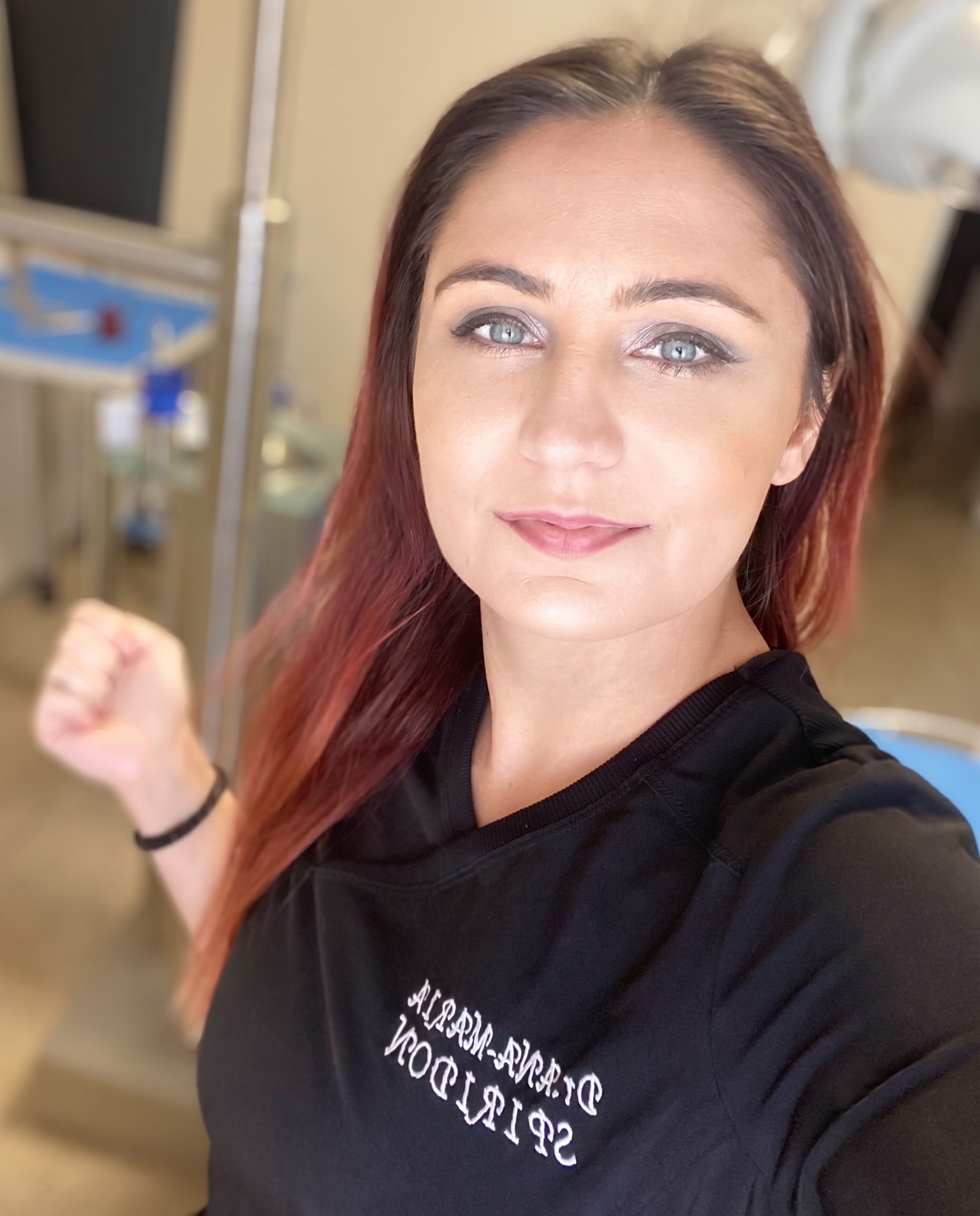
Dr. Ana-Maria Spiridon

Academic background
Education & training
PhD in Dental Medicine, Implant-Prosthetic Therapy (ongoing)
Carol Davila University of Medicine and Pharmacy, Bucharest · 2025-Present
Bachelor's degree in Dental Medicine
Apollonia University of Iași
Areas of competence
Practice areas
Dental Prosthetics
Prosthetic dentistry deals with replacing missing teeth and rebuilding severely damaged ones, with the aim of restoring chewing, speech and the appearance of the dental arches. The plan starts from the clinical examination, radiographs and an analysis of the bite; a fixed or a removable solution is decided together with the patient, according to the clinical situation, the condition of the remaining teeth and the bone support. The difference is felt daily: fixed work stays in place, but under the pontic of a bridge cleaning is done with special floss or interdental brushes, while removable work is taken out for cleaning and calls for patience at first. As a rule, the final shape is not cemented straight away: before that there are try-in stages, in which we check how the teeth meet and how they look when you smile.
What it includes
- Crowns and bridges on natural teeth
- Partial or complete removable dentures, including cast-framework designs
- Chairside try-in stages and successive adjustments before the work is finalised
- Work with the dental laboratory on the shape, shade and occlusion of the restoration
- Periodic check-ups to verify the fit and the hygiene around the restoration
Dental Aesthetics
Aesthetic dentistry covers restorations at the front of the mouth, where the shape, texture and shade of the tooth matter as much as the strength of the material. Any aesthetic stage starts from the health of the tooth and the gum: decay, gum inflammation or tartar deposits are treated first, because an inflamed gum bleeds and changes its contour, and that contour is the frame in which the front teeth are seen. The shade is chosen with shade guides, by comparison with the adjacent natural teeth, as a rule in daylight: a living tooth does not have a single colour, but is more saturated towards the gum and more translucent towards the edge. That is why the conversation about what exactly you do not like about your smile comes before any procedure.
What it includes
- Ceramic veneers and direct restorations in the anterior area
- Shade selection by comparison with the adjacent natural teeth
- Adjusting the shape, the texture and the proportions of the front teeth
- Professional cleaning and treatment of gum conditions before the aesthetic stage
- Maintenance advice: aesthetic materials keep their appearance only with careful hygiene
Implant-Prosthetic Therapy
The implant-prosthetic stage follows the integration of the implant into the bone and consists of making and fitting the restoration it supports. It involves imaging assessment, choosing the abutment and the crown material, and then careful checking of the bite, so that chewing forces are distributed evenly. That check matters more than it sounds: a natural tooth is joined to the bone by a ligament that cushions pressure and signals it, whereas an implant sits directly in the bone, so a contact that is too strong is not felt in time. The surgical and the prosthetic stages are planned together, as a team, and the shape of the crown is designed from the outset so that you can clean the area daily, at home.
What it includes
- Imaging assessment and planning of the implant-supported restoration
- Fixed crowns and bridges supported by implants
- Removable solutions stabilised on implants, in cases with extensive tooth loss
- Checking the bite and the access needed to clean around the implant
- Periodic clinical and radiographic check-ups, to monitor bone levels
Restorative Dentistry
Restorative dentistry rebuilds teeth affected by decay, fractures or wear. I talk you through why I choose a restoration made directly at the chair or one produced in the laboratory: it comes down to how much tooth structure has been lost, to the tooth's role in chewing and to the condition of the root. A direct filling is usually done in a single appointment, while an inlay or a crown involves an impression, a laboratory stage and a second appointment. The aim is to restore the anatomical shape and the correct contacts with the neighbouring teeth and the opposing arch. The contact point is not a detail: if it is missing, food can pack in there at every meal, and the gum can become inflamed.
What it includes
- Tooth-coloured composite fillings
- Inlays, onlays and laboratory-made crowns
- Build-ups for endodontically treated teeth, when little structure remains
- Restoring the contact points and checking the bite after every restoration
- Re-assessment at periodic check-ups, to detect wear or marginal leakage
Conservative Dentistry
A conservative approach aims to preserve as much healthy tooth structure as possible, for a simple reason: enamel that is lost does not grow back, and every later procedure starts from what remains. It involves early diagnosis of decay, preparations limited to the affected area and adhesive materials that bond to the tooth structure. A lesion caught early can sometimes simply be monitored, without being drilled. It also covers root canal treatment, when the dental pulp is affected and the tooth can be kept in the arch: the inflamed tissue inside is removed and the tooth stays where it is, though it becomes more fragile and often needs protecting afterwards.
What it includes
- Early clinical and radiographic diagnosis of decay
- Minimally invasive preparations, limited to the affected tissue
- Adhesive materials, with little healthy enamel removed
- Root canal treatment when the dental pulp is affected
- Monitoring early lesions over time, together with prevention advice
General Dentistry
A general consultation is the starting point of any treatment plan: clinical examination, radiographs where they are needed, assessment of the gums and the bite, and a discussion of medical history and current medication. That last part is not a formality: some conditions and some treatments you are on can affect bleeding or healing, so it is good to know about them in advance. From the consultation comes a staged plan, with options, risks and an order of priorities, discussed together with the patient. And if you have not been to a dentist for a long time, the first appointment is in any case one for assessment and conversation.
What it includes
- Consultation, clinical examination and interpretation of X-rays
- A staged treatment plan, with clear options and priorities
- Scaling, professional polishing and guidance on daily hygiene technique
- Re-assessment of older restorations and of the supporting tissues
- Periodic check-ups, at the interval agreed with the dentist
Communication
Languages spoken
First consultation