
Welcome!
Quick contact
Write to me in just a minute
How can I help you today?
You can select one or more reasons.
Patient experiences
Patients who chose transparency
“Recomand să mergeți la doamna doctor Spiridon în primul rând pentru profesionalitate. Foarte înțelegătoare, are multă răbdare. ❤️”
Mariana Hosu
“⭐⭐⭐⭐⭐ Cel mai bun doctor stomatolog ⭐⭐⭐⭐⭐”
CataLin Magher
“Foarte bună și foarte corectă.”
Jan Paun
“Recomand! Totul la superlativ!”
Gabriel Chivu
“Recomand... cea mai bună!! :*”
Anca Alexandra Negru
“Un medic care lucrează cu multă pasiune, cu simțul răspunderii și, nu în ultimul rând, foarte plăcut și înțelegător.”
Elena Curelea
“Experiență, profesionalism și multă răbdare.”
Spiridon Florin
“Un stomatolog pasionat de ceea ce face, un om deosebit de frumos!”
Magdalena Duna
“Recomand cu încredere!!!!”
Greta Bujoiu
My method
Three steps that define my approach
Complete assessment & diagnosis
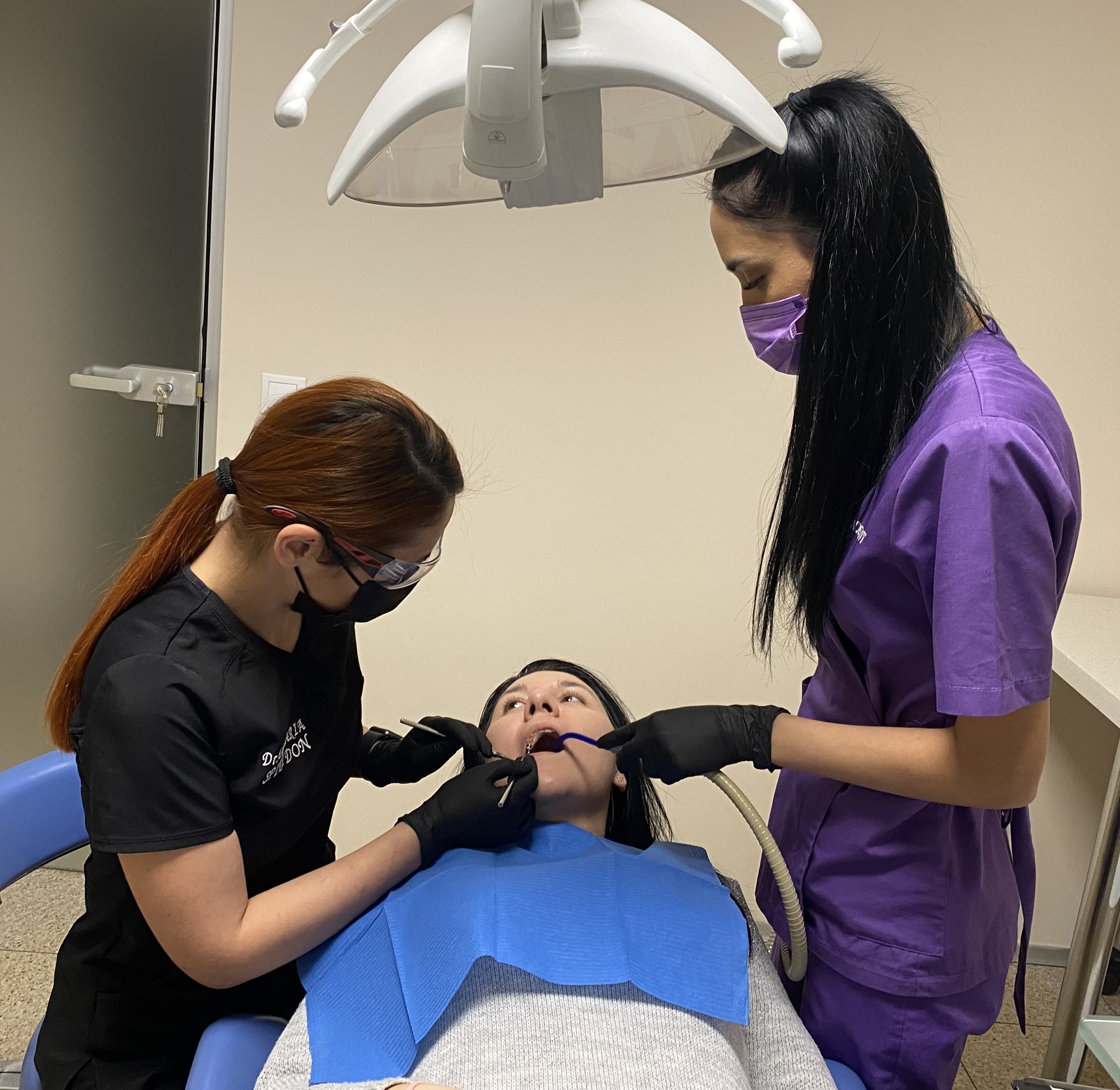
The first stage includes a 3D intraoral scan, a panoramic X-ray, other X-rays when they are needed and a thorough clinical assessment. I need all of these to understand your situation precisely before any decision is made. At this visit you do most of the talking, while I ask questions and take notes.
Learn moreTreatment carried out with care
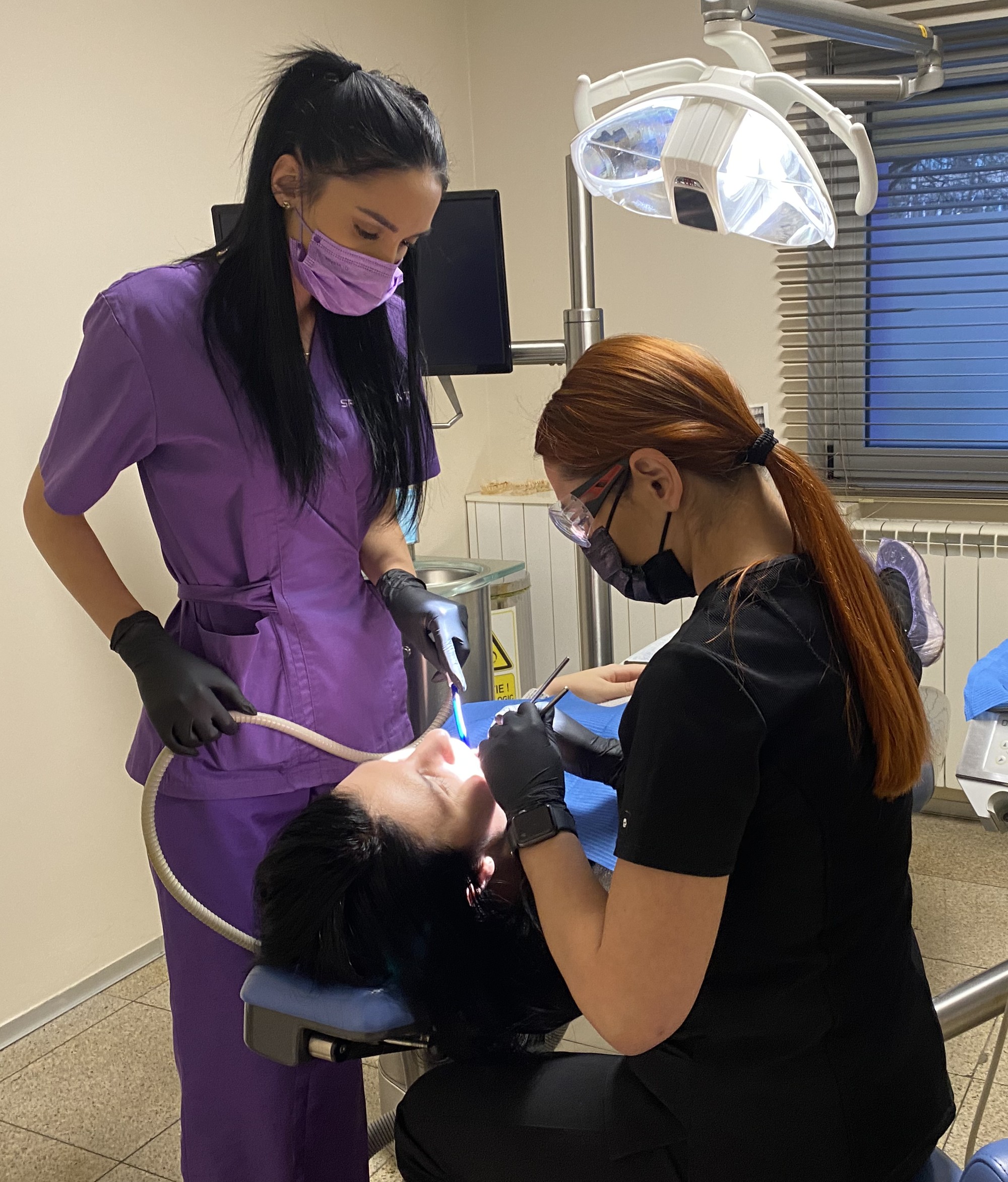
During the procedure itself I pay attention to detail, work gently and keep your comfort in mind at every step. Throughout, I tell you what I am doing, so that nothing takes you by surprise.
Learn moreFollow-up & long-term care
I see you for regular check-ups, give you clear advice on care and remain available between visits, so that the result stays healthy and stable over time. I make small adjustments at the right moment rather than late.
Learn moreFrequently asked questions
I focus mainly on prosthetics, dental aesthetics and implant-prosthetic therapy, which means that I rebuild teeth with crowns, veneers, bridges and implant-supported restorations. Alongside these, I also provide restorative and general dentistry, namely aesthetic fillings, root canal treatment and preventive care. That is why I pay equal attention to function, so that you can chew well and without discomfort, and to appearance, for a balanced, natural smile. Every case begins with a consultation, after which I propose a treatment plan adapted to your situation.
Instead of conventional impressions, I use 3D intraoral scanning. A small camera passes along the dental arches and creates a precise digital model, and the procedure is more comfortable for you. In aesthetic cases, the shape and shade of the future restoration are first planned digitally. Then, on the basis of the photographs and the scan, we discuss them and decide on them together, before we begin treatment. The digital simulation serves only as a guide. It shows the direction the treatment will take, but the final result depends on your anatomy, on the space available and on how the gum settles after treatment. The restorations themselves are designed and milled using CAD/CAM, based on the digital model, so the stages are easier to anticipate.
I work mostly with all-ceramic, metal-free materials, namely zirconia and pressed ceramic based on lithium disilicate. Zirconia is strong and suitable for areas under heavy load and for bridges. Pressed ceramic has a translucency close to that of enamel and is indicated for veneers and for the front teeth. Without metal, the restoration looks more natural, no grey margins appear at the gum line, and biocompatibility is good. I choose the material according to the position of the tooth, the chewing load it has to bear and your aesthetic expectations. There is no single solution that suits every case.
When one, several or all of the teeth are missing, implants can support a fixed restoration (crowns, bridges or a full arch) that is anchored in the bone rather than resting on the gum. I usually begin with the assessment, for which a 3D CBCT scan is taken as a rule, and then I place the implants. Healing follows, meaning the period in which the bone integrates with the implant, and the final prosthetic restoration comes at the end. We decide the number of implants and the type of restoration together, after the assessment, and before each stage I show you what I see and answer your questions. I aim for a stable, comfortable solution that comes close to the feel of natural teeth. The result, however, depends on the quantity and quality of the bone, on the health of the gum and on day-to-day hygiene. Once the restoration is finished, it needs careful hygiene and regular check-ups, because the tissue around the implant can become inflamed, and in the early stages this inflammation rarely hurts.
The first visit is, above all, a conversation. I want to understand what is bothering you, what you would like to change and what your dental history is. Then come the clinical examination and a new panoramic X-ray, which is always taken at the initial consultation. If needed, a 3D CBCT scan is added to give a complete picture of the situation. After the initial consultation, imaging is no longer done routinely. From then on, every new X-ray needs a clinical indication, which means it has to be able to provide information that changes the diagnosis or the treatment plan. At a periodic check-up, for example, the check-up X-ray is taken when the examination justifies it. If you have recent X-rays, please bring them to the consultation, because they are useful for comparison. Based on this information, we decide together on the direction of treatment, and as a rule you receive a written treatment plan at the same visit, with its stages and costs. I do not begin any irreversible procedure until you understand the plan and agree to it.
The duration varies a great deal from one case to another. Aesthetic work (a few veneers or crowns) can usually be completed in a few appointments, over 2-4 weeks. Implant treatment takes longer, because the bone needs time to integrate with the implant. It usually takes between 4 and 9 months from placing the implant to the final restoration, depending on the situation. The duration increases if bone augmentation is needed, which is carried out by collaborating surgeons. Likewise, if decay, the gums or an infection have to be treated before the restoration itself, those stages are added to the schedule. At the end of the consultation I give you an estimated timeline, so that you know what to expect.
Fear of dental treatment is very common, and I take it seriously. I work at a calm pace and explain each step to you before I carry it out. I do not start until I am sure the anaesthetic has taken effect. Digital technology helps as well. As a rule, scanning instead of conventional impressions and more precise procedures make your visit easier. You can ask me to stop at any time. Local anaesthesia controls pain, but not the sensation of pressure or vibration. If you do feel pain during a procedure, tell me straight away, because the anaesthetic can be topped up. For many patients, a good way to begin is a first visit with no treatment at all, given over to conversation and examination. The panoramic X-ray, which the initial consultation always includes, is also taken at this visit. If you would like to tell me first what is worrying you, call me.
The price depends on the treatment you need, so it is set at the consultation, after the examination and, where appropriate, after the imaging assessment. A filling, a crown and an implant-supported restoration each involve different stages, and every patient's situation is different. Indicative figures for each treatment are published on the Pricing page of this site, and you can consult them at any time. You should also know that payment is made at the medical unit where the consultation or treatment takes place. At the end of the consultation you usually receive a written treatment plan, with the stages and costs for your case, so that there are no surprises along the way. If you would like an estimate for your own situation, the simplest way is to call me, and I will answer you personally.
How long a restoration lasts depends on several factors (daily hygiene, habits such as teeth grinding, regular check-ups), so it would not be fair to promise the same result to every patient. In general, though, modern all-ceramic restorations that are made correctly and well looked after can function for many years. I use certified materials that come with the manufacturer's documentation, and for the work carried out you have the rights the law gives you. When a restoration is lost, most often it is not because the ceramic has failed, but because decay has appeared at the gum margin or the tooth beneath it has fractured. That is why daily hygiene, cleaning the spaces between the teeth and regular check-ups are what count in the long term. If you grind your teeth, a night guard matters as well.
The care is simple, but it has to be consistent. Brush your teeth twice a day, for at least two minutes, with a fluoride toothpaste. Clean the spaces between your teeth with floss or interdental brushes, and come in for a professional cleaning, usually every 6 months. On ceramic, use non-abrasive toothpastes without “whitening” particles, which can dull the surface gloss. Ceramic does not change colour with whitening, so if you would like lighter teeth, the whitening is done before we choose the shade of the restoration. With implants, regular check-ups are essential, because that is how I can check the gum and the surrounding bone. Clean every day along the gum margin, using interdental brushes or special floss, and if you grind your teeth at night, I can recommend a night guard. Come back without waiting for your next check-up if the restoration feels “too high” when you bite, if it moves, if you notice sensitivity that does not go away, or if the gum bleeds or becomes inflamed. If you have any questions, you can call me.